
Residential Basement Waterproofing Services in Farmington Hills
The residential jobs we pass on, biggest first. The inspection decides which one your basement needs, and plenty need one of the smaller ones.
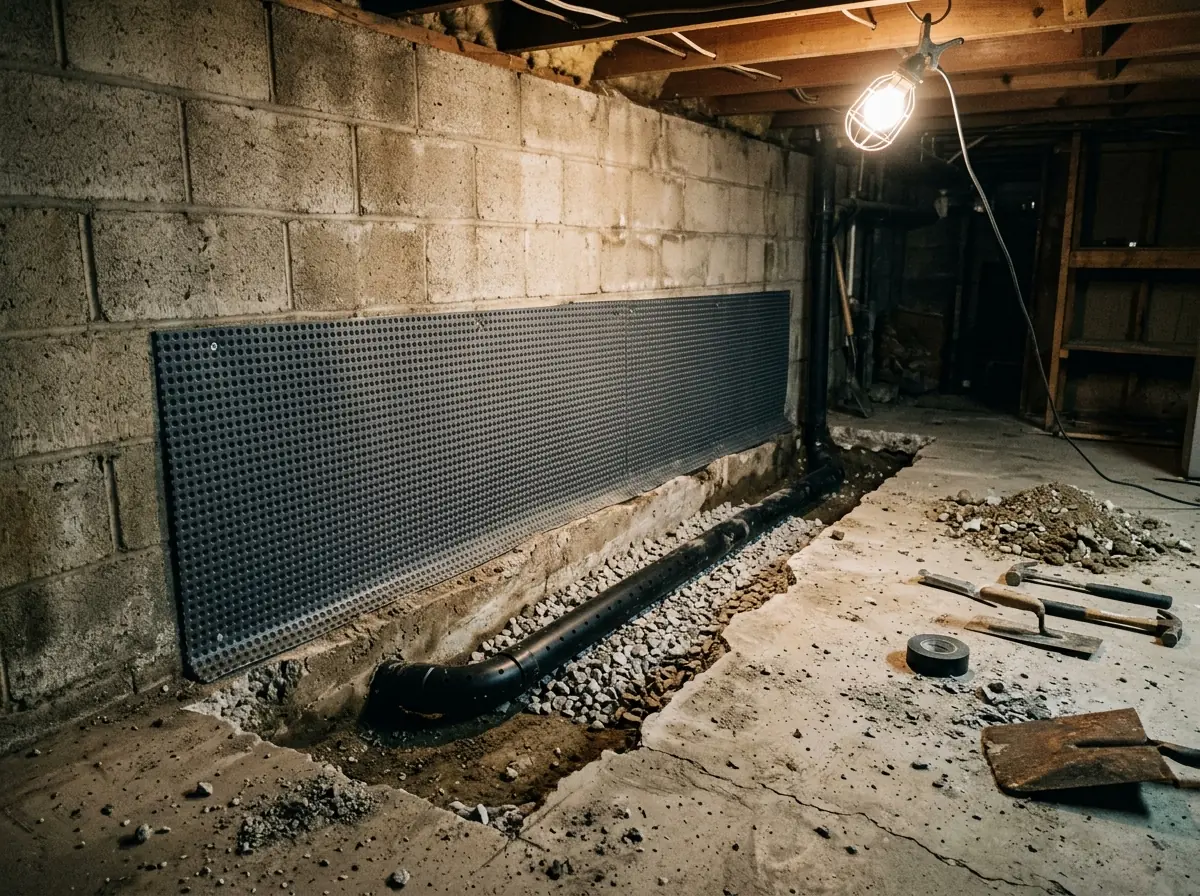
Interior Basement Waterproofing and Drain Tile
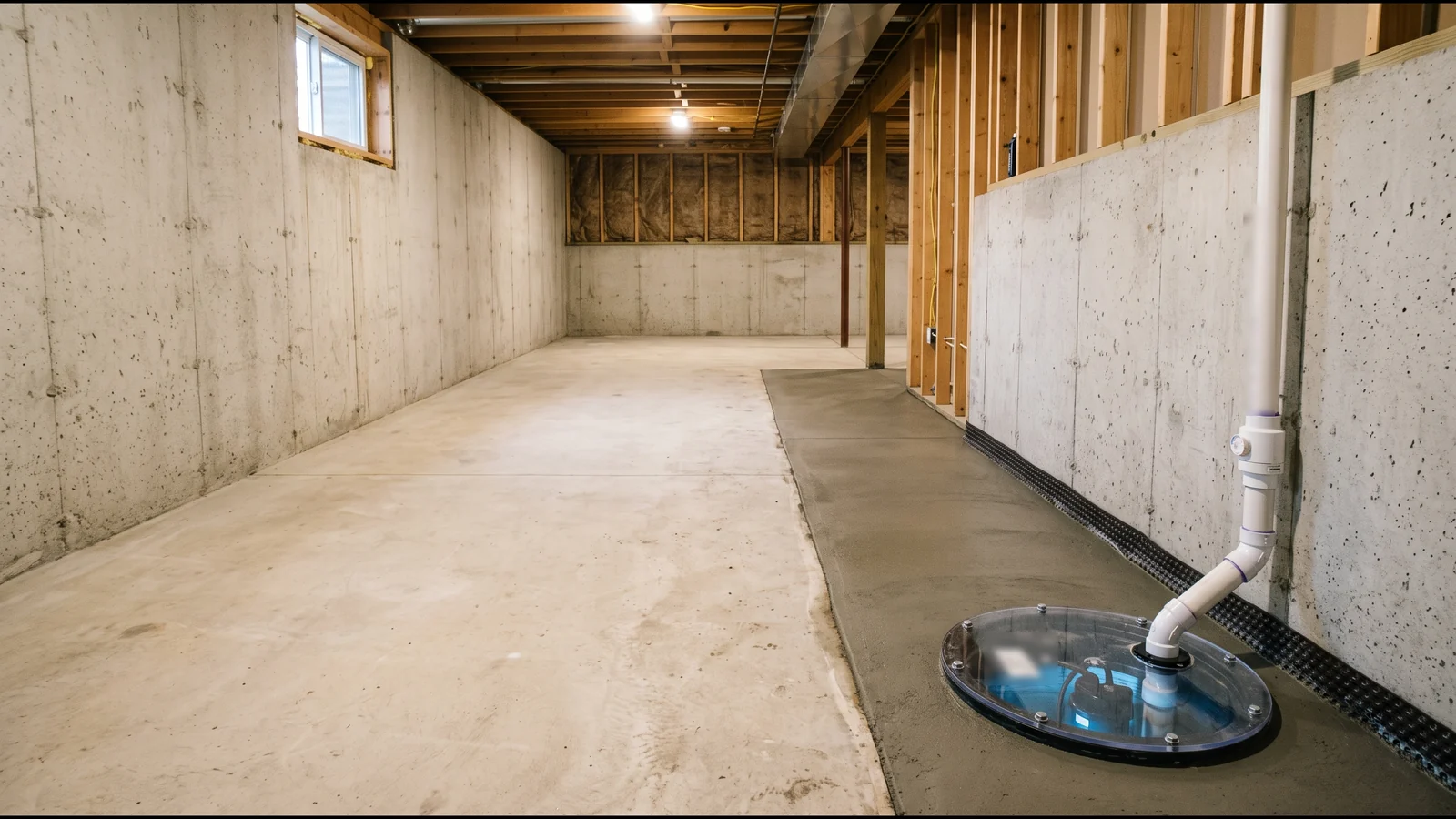
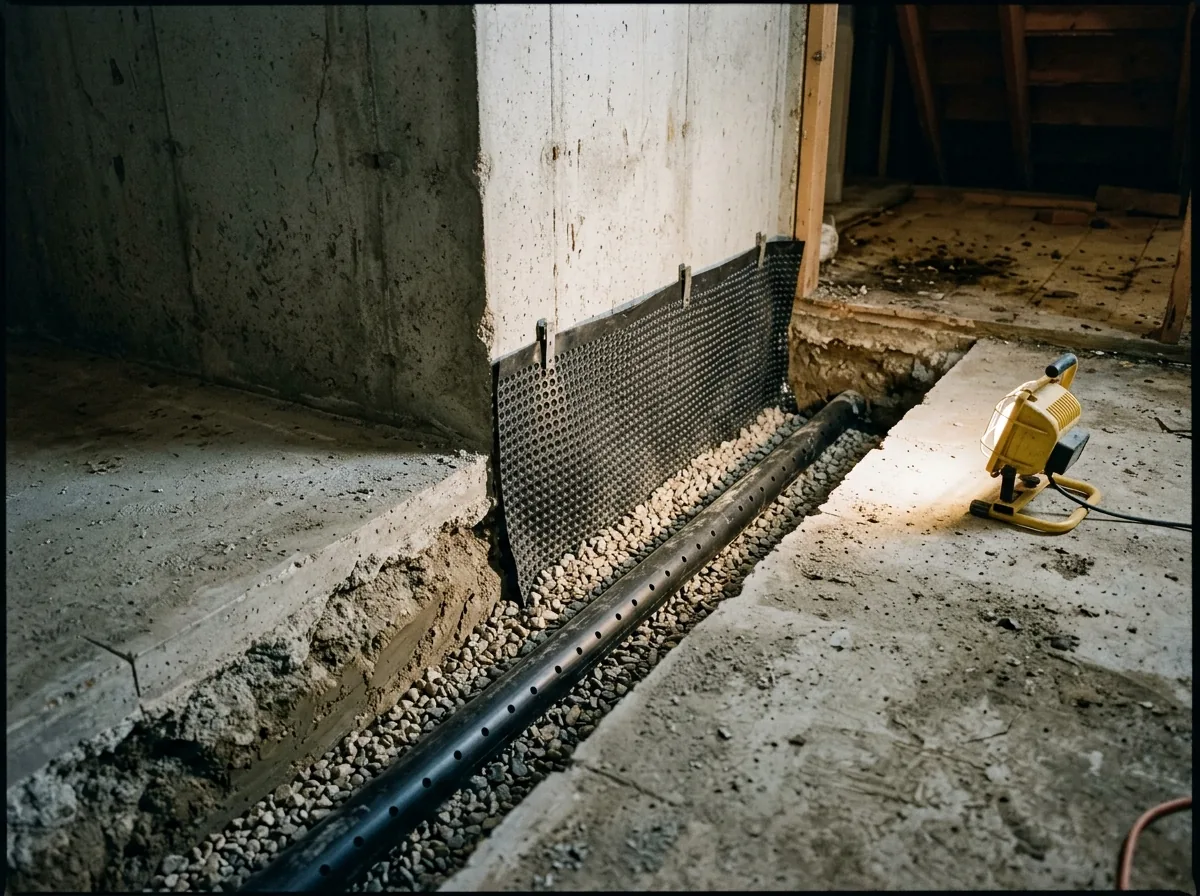
Interior drain tile works like a gutter laid along the footing. The crew cuts a strip of slab along the walls, digs down beside the footing, sets perforated pipe in washed gravel and runs it to a sump pit. A dimpled membrane on the lower wall steers seepage into the pipe, and new concrete closes the trench. Water still reaches the wall. It just gets a way out before it builds pressure, and at about 62.4 pounds per cubic foot, water in saturated soil pushes hard. Michigan's residential code, based on the 2015 IRC, already calls for drains around basement walls, emptied by gravity or a pump.
See interior basement waterproofing in Farmington Hills and drain tile repair.
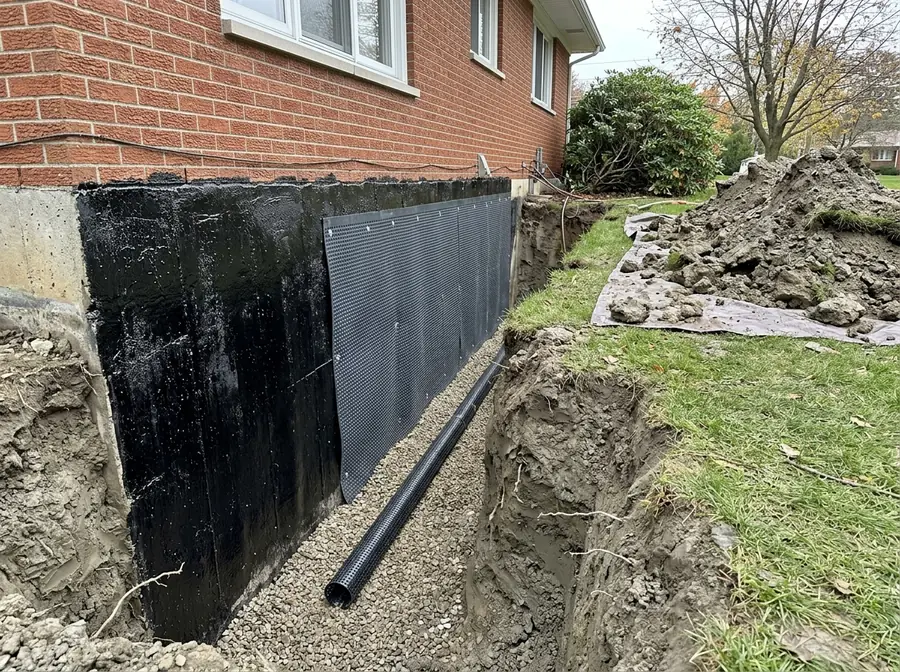
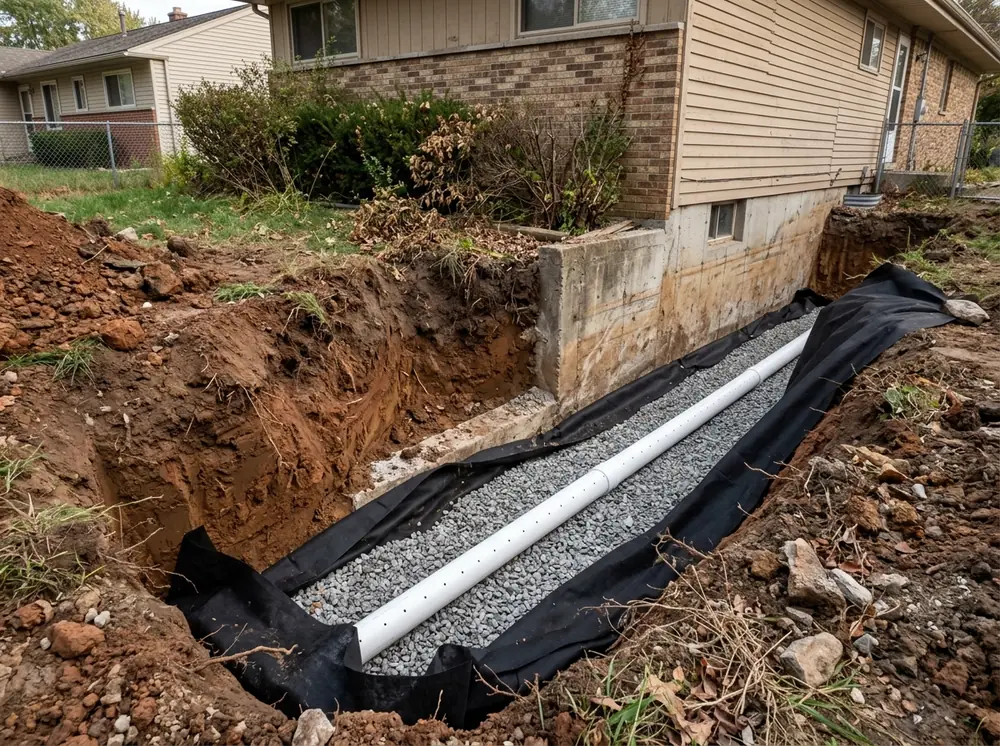
Exterior Foundation Waterproofing
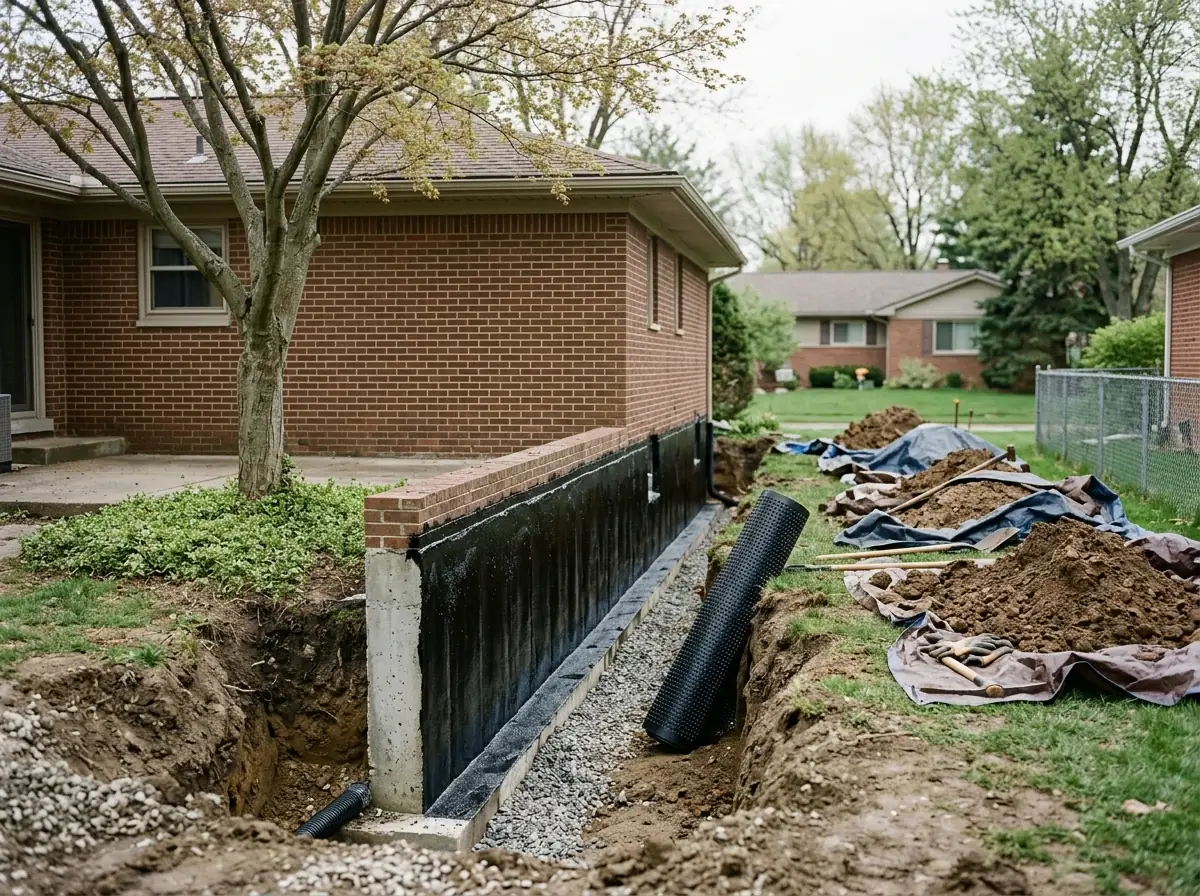
Exterior waterproofing stops water at the outside face of the wall. The contractor digs to the footing, cleans and patches the wall, and applies a membrane, then drainage board, a new footing drain in gravel and clean backfill. Code requires every basement wall to be at least dampproofed. Full waterproofing, with materials such as 40-mil polymer-modified asphalt or 60-mil flexible polymer cement, is required where a high water table or severe soil-water conditions are known.
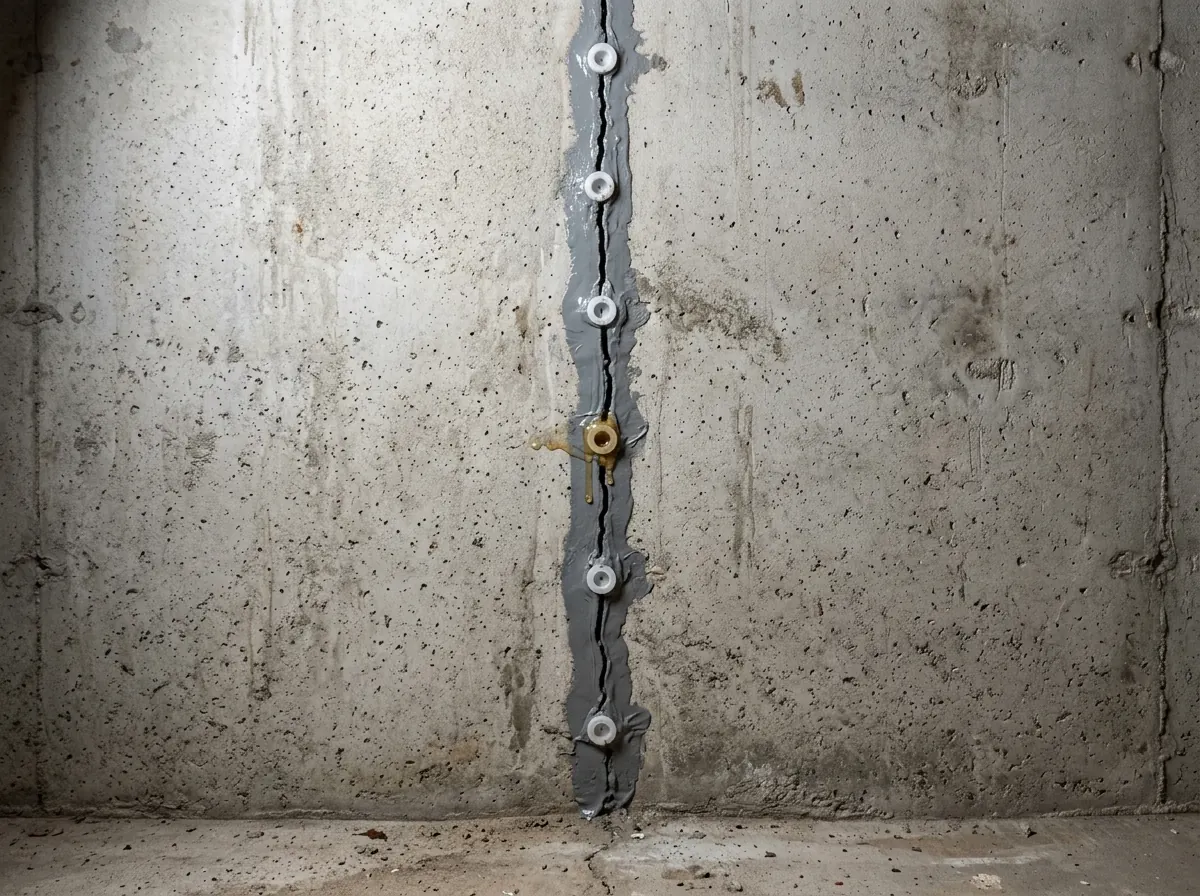
Foundation Crack Repair
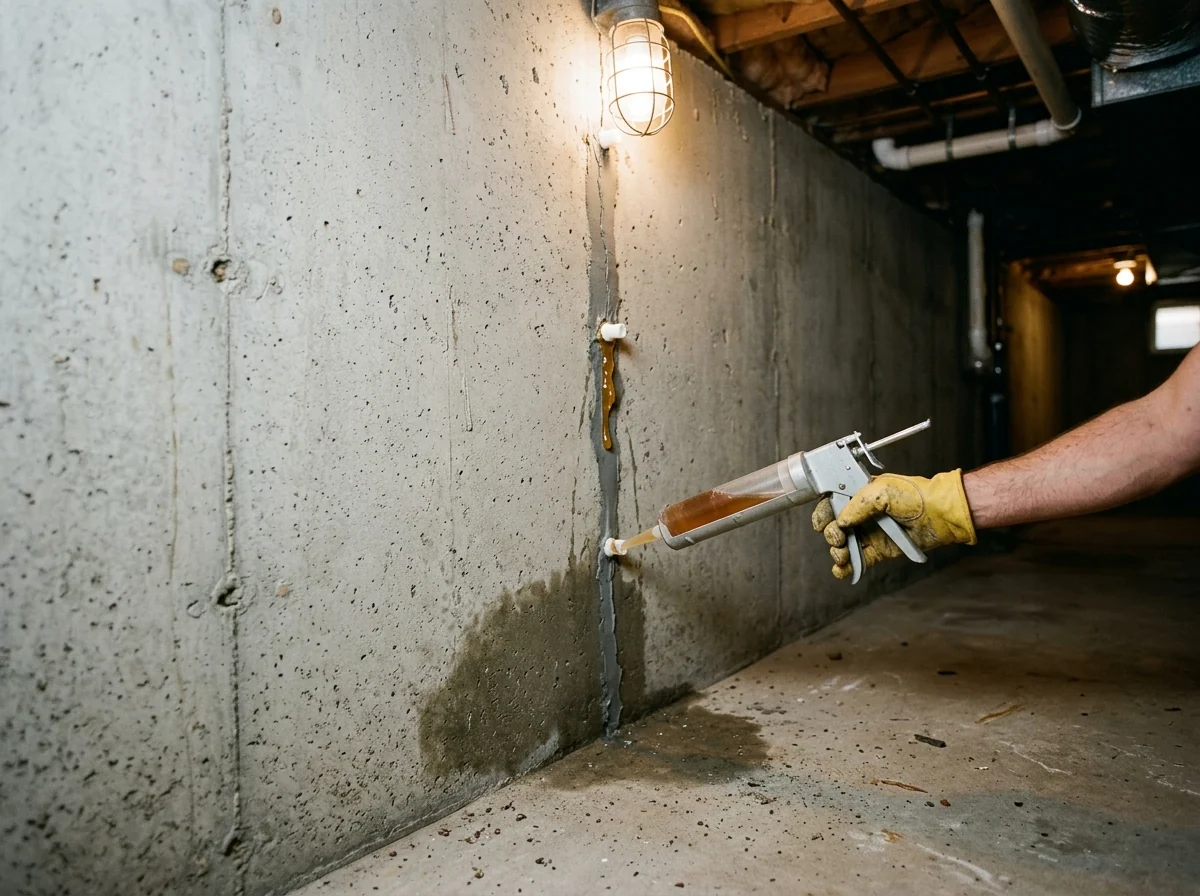
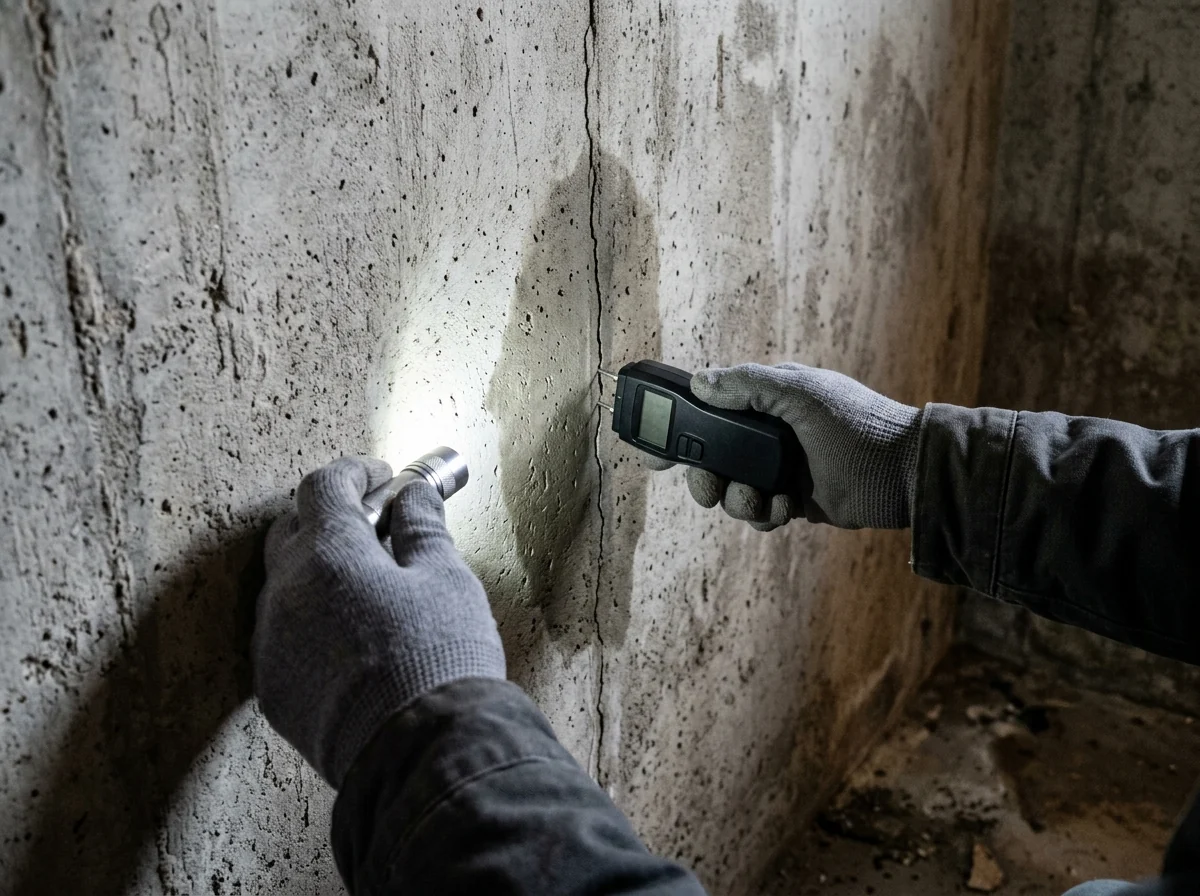
Most cracks in a poured wall are shrinkage cracks: narrow, close to vertical, and a leak more than a structural problem. They're injected from inside: ports along the crack, a sealed surface, resin pumped in until it shows at the next port. Epoxy bonds the concrete but needs a dry crack. One that's actively seeping usually gets polyurethane, which foams and stays flexible. A horizontal crack forms where soil pushes hardest on the wall, so it's treated as a wall problem, not a leak.
See foundation crack repair in Farmington Hills and foundation repair.
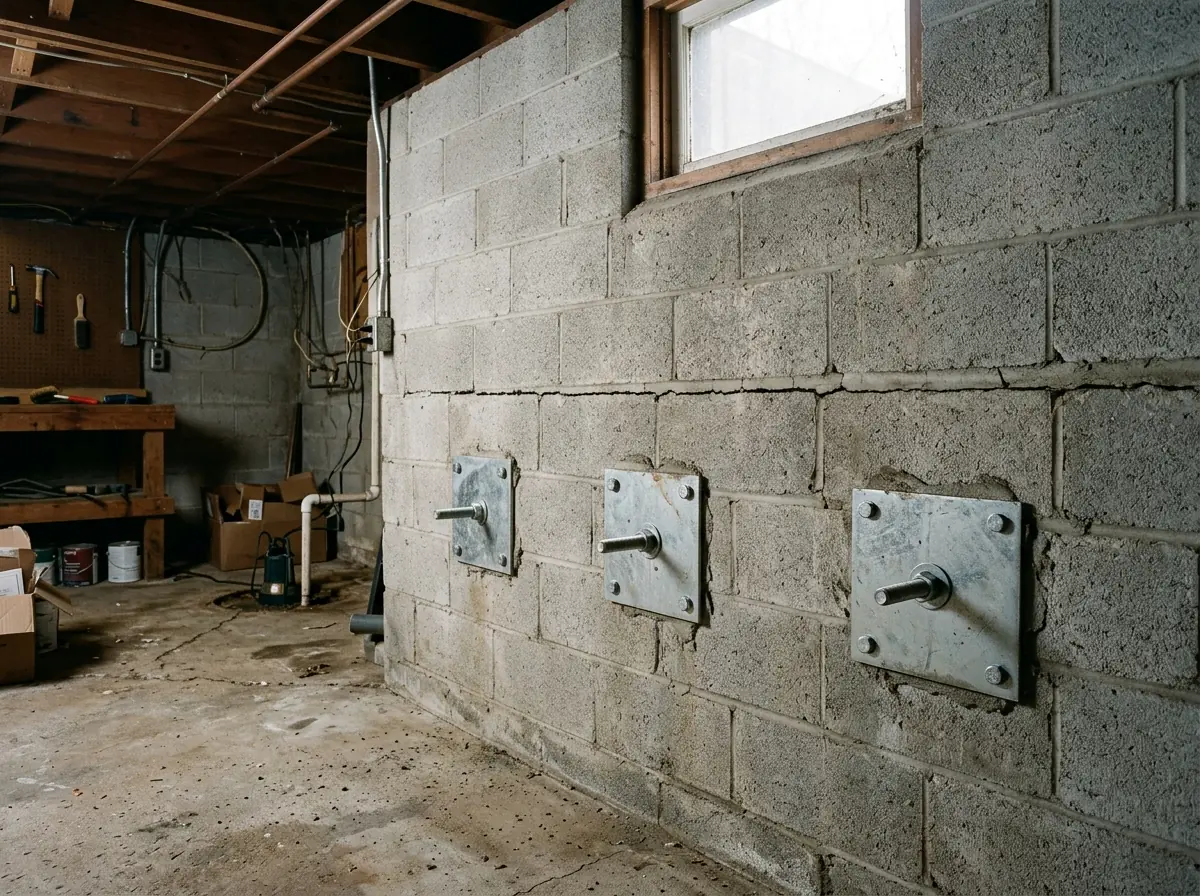
Bowing Basement Wall Repair
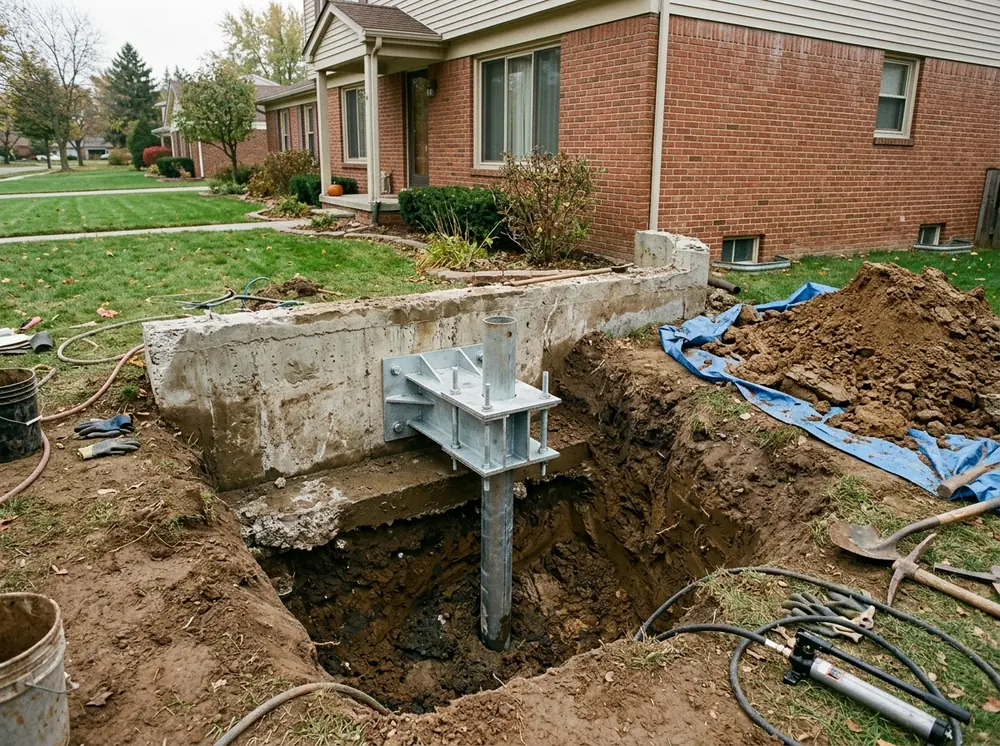
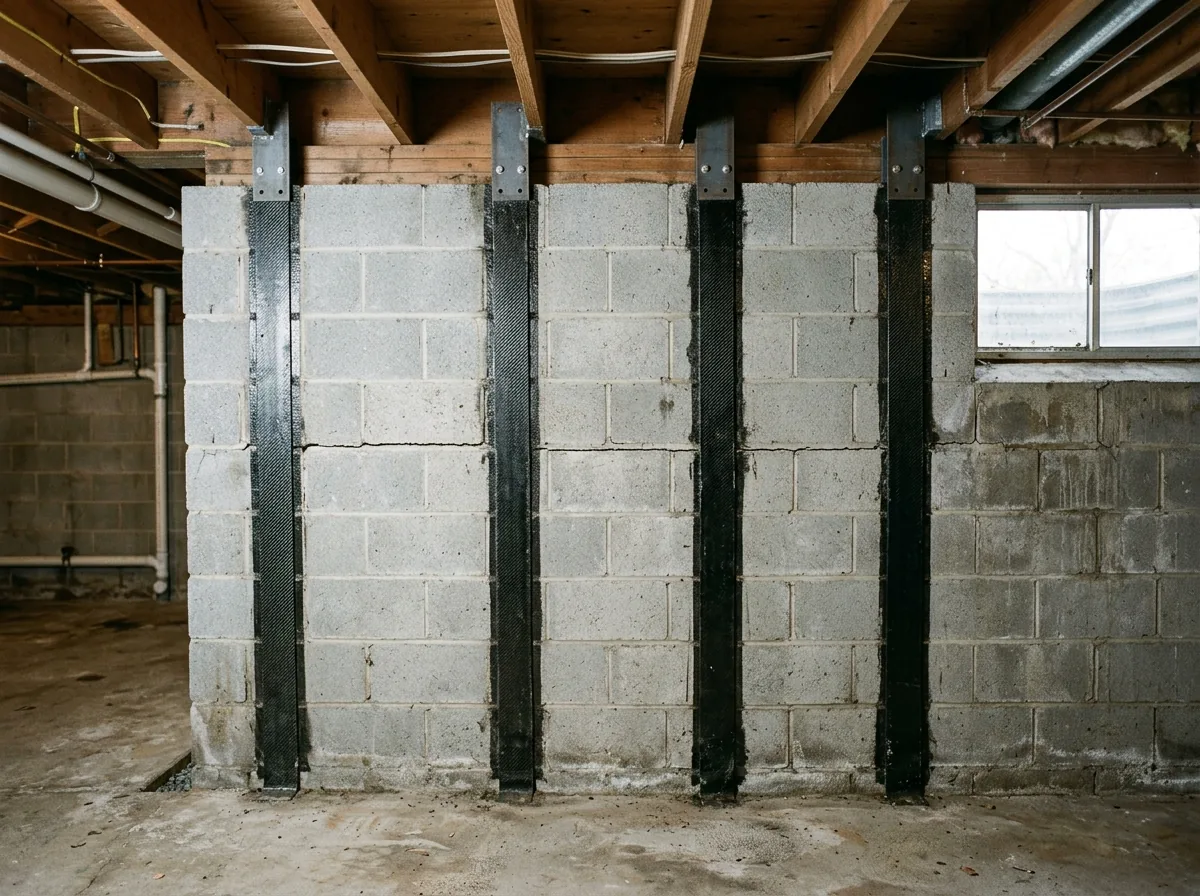
A block wall that leans in or shows a long horizontal crack is usually being pushed by wet soil. For minor bowing the usual repairs are wall anchors (steel plates inside, tied by rods to anchors buried in the yard) and carbon fiber or steel straps fixed to the wall. A wall that has moved further needs a heavier repair, and on a badly bowed wall we'd get a structural engineer's opinion before anyone quotes. Bracing doesn't remove the water that loaded the wall, so drainage usually goes in too.
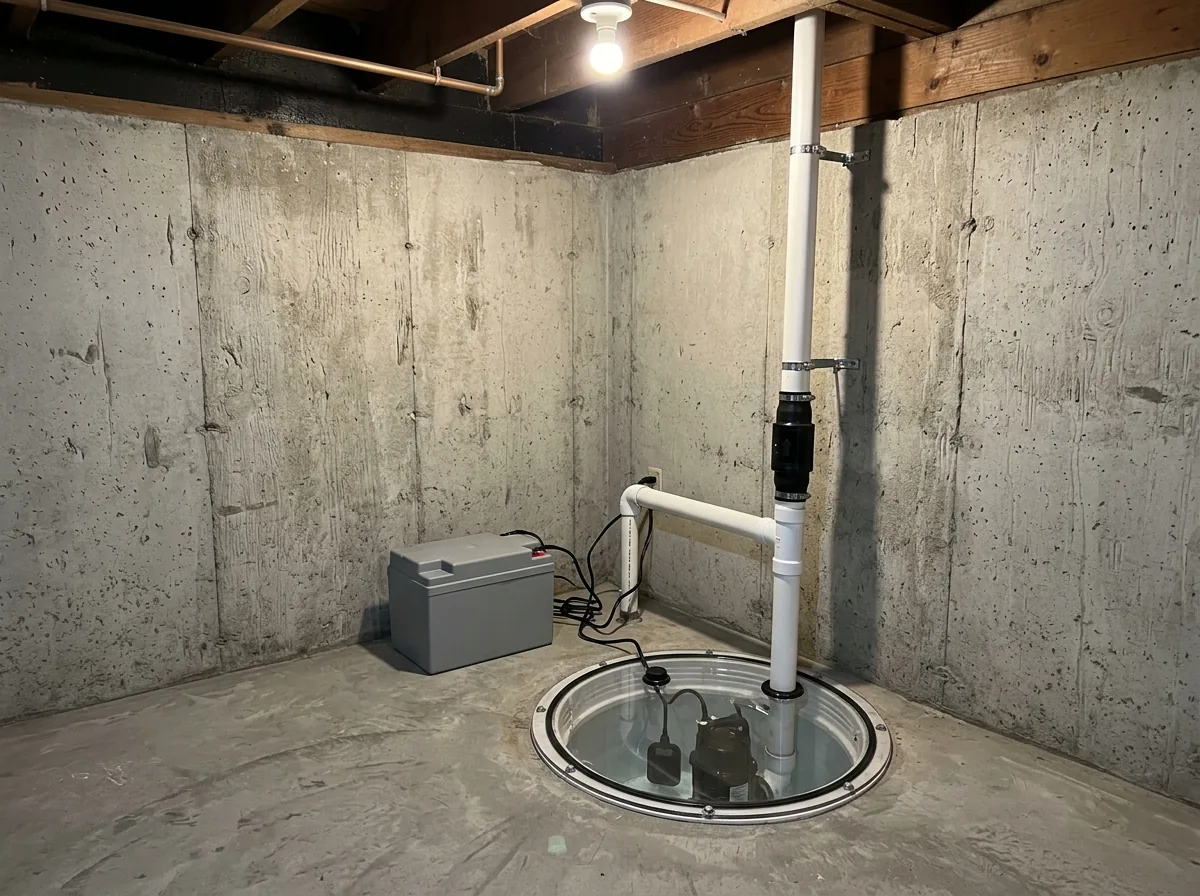
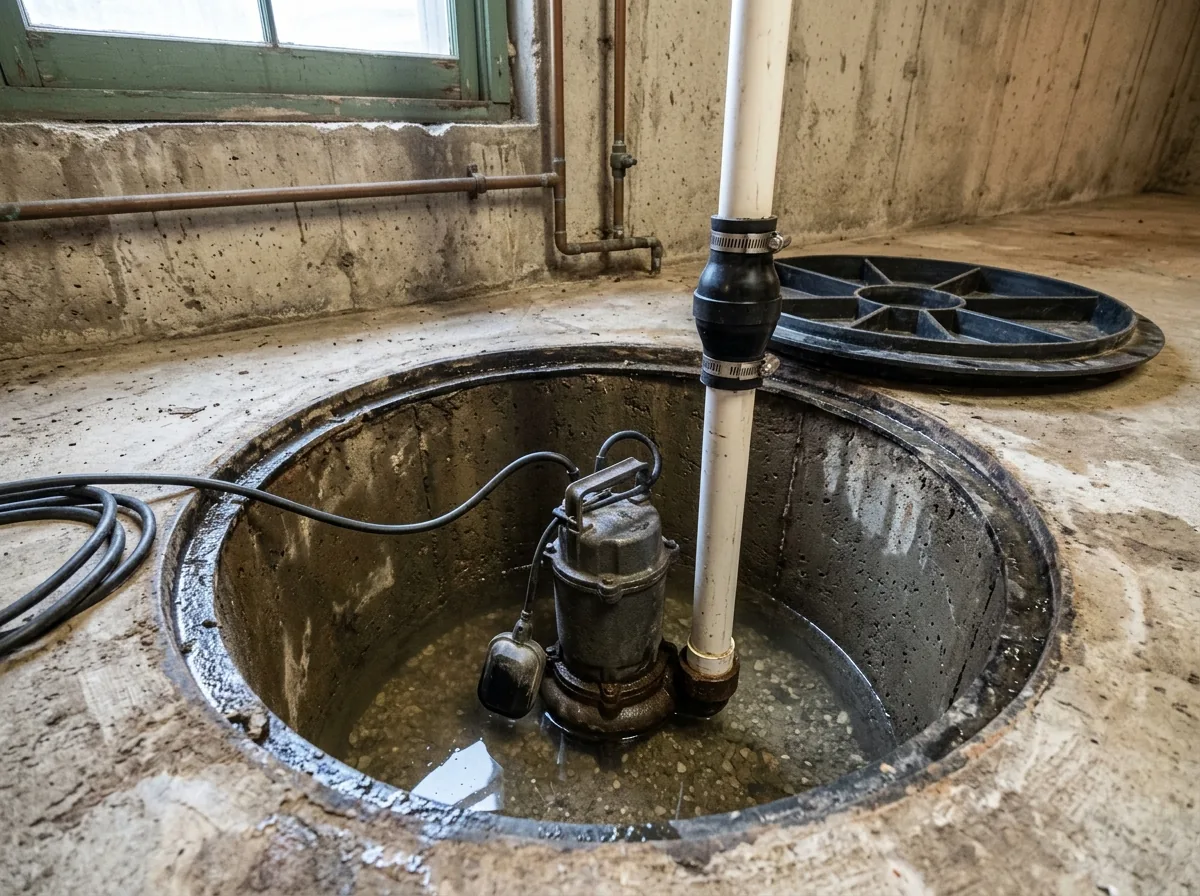
Sump Pump Installation and Replacement
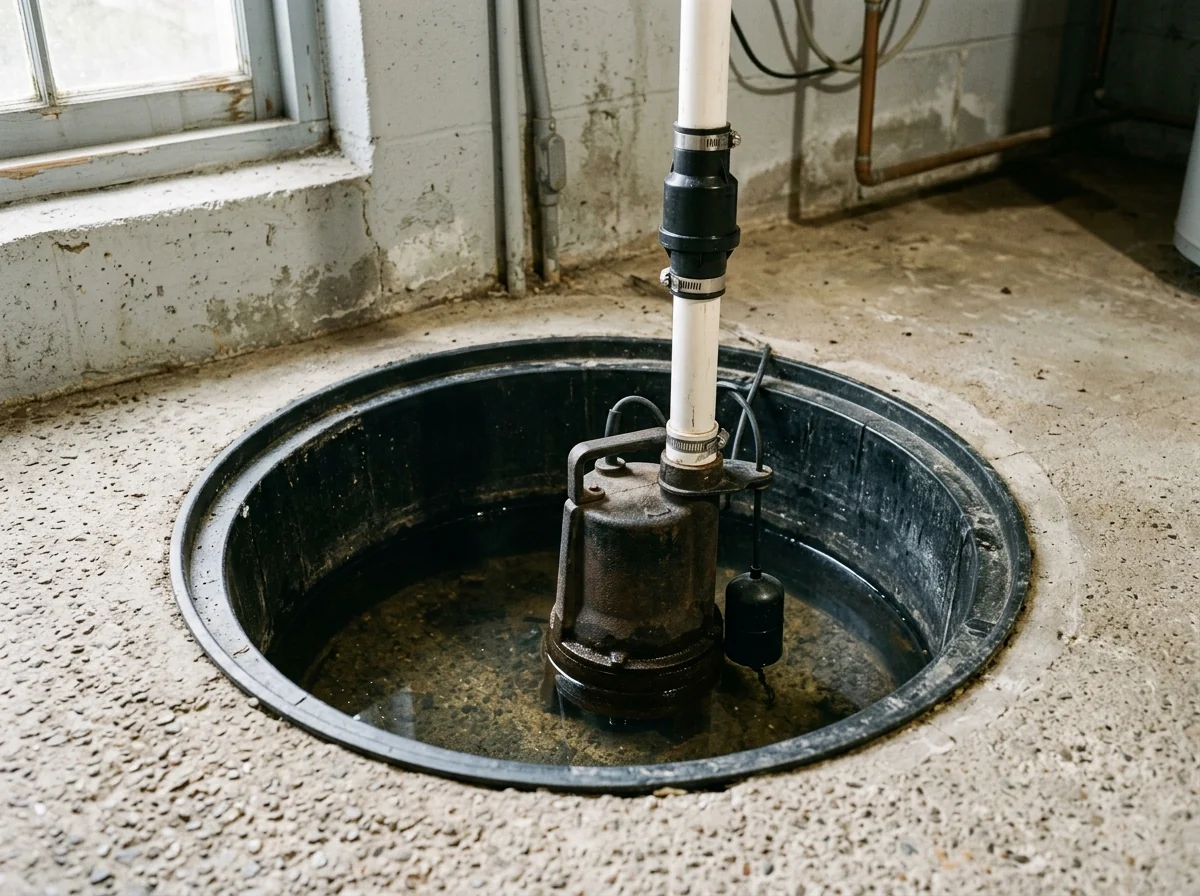
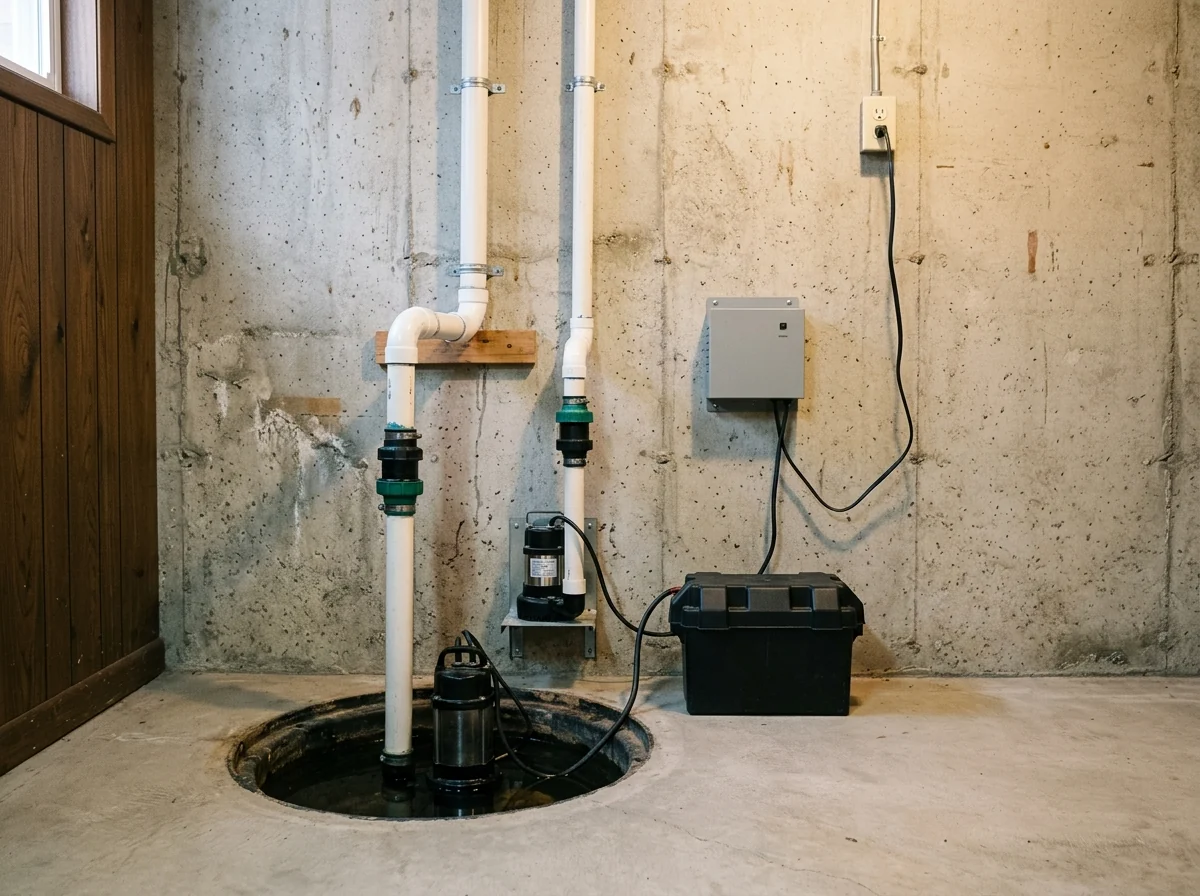
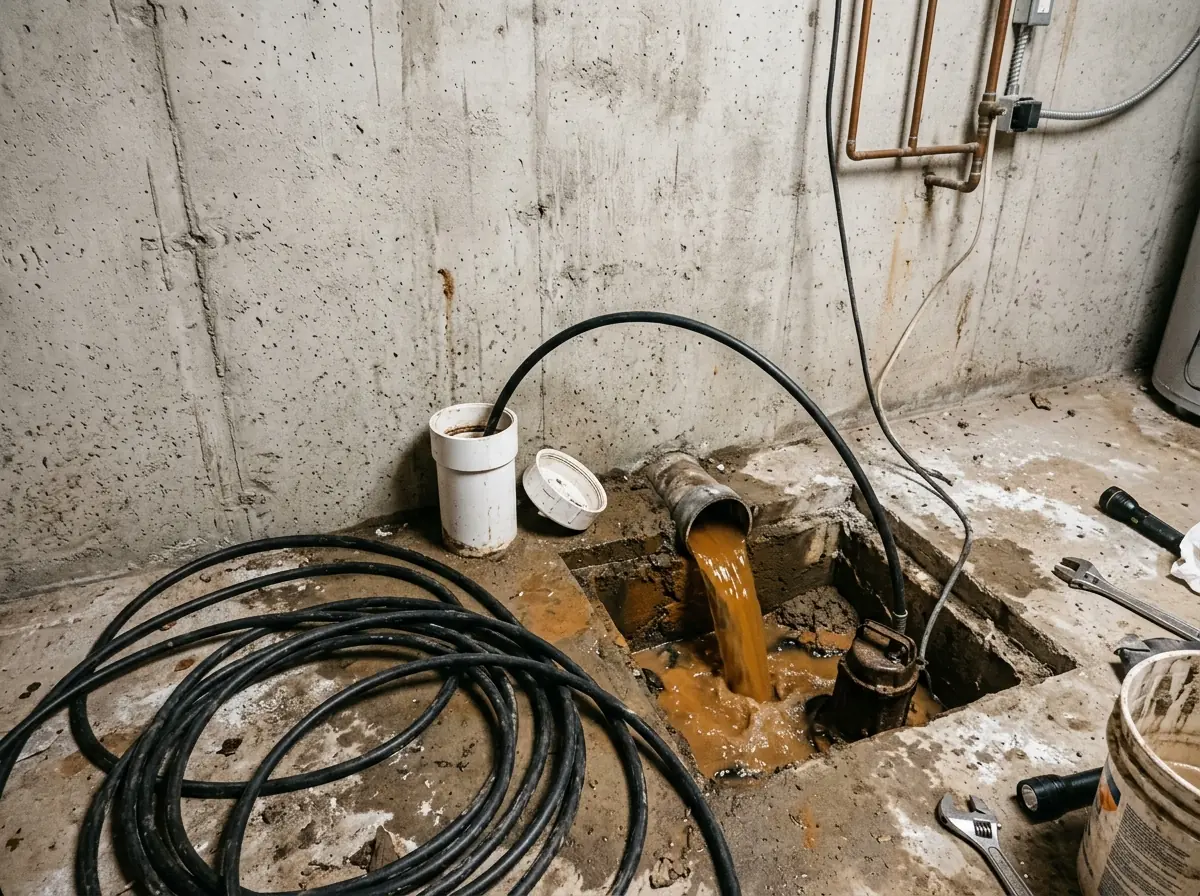
Every drain tile system ends at the sump, which makes the pump the one part that can't quit during a storm. An installation means a lined pit, a pump sized to the inflow, a check valve, a sealed lid and a discharge line run where the city allows. Replacement is often just pump and valve. A battery backup pump covers power cuts. A water-powered backup runs on city water pressure instead (30 psi or more recommended), uses about a gallon of city water for every two it removes, and in Michigan needs a reduced-pressure (RPZ) backflow preventer. Farmington Hills lists sump work under both plumbing and electrical permits.
See sump pump installation in Farmington Hills, sump pump repair and battery backup sump pumps.
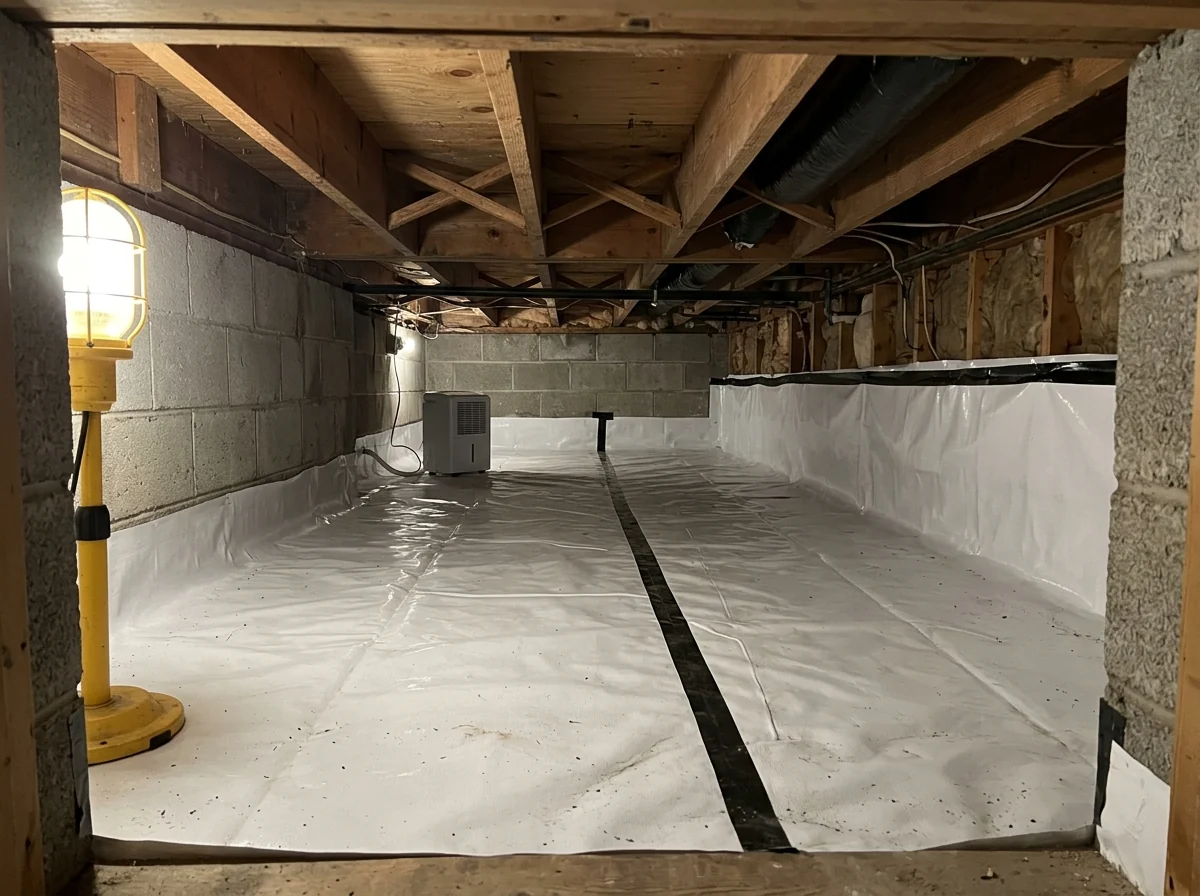
Crawl Space Encapsulation
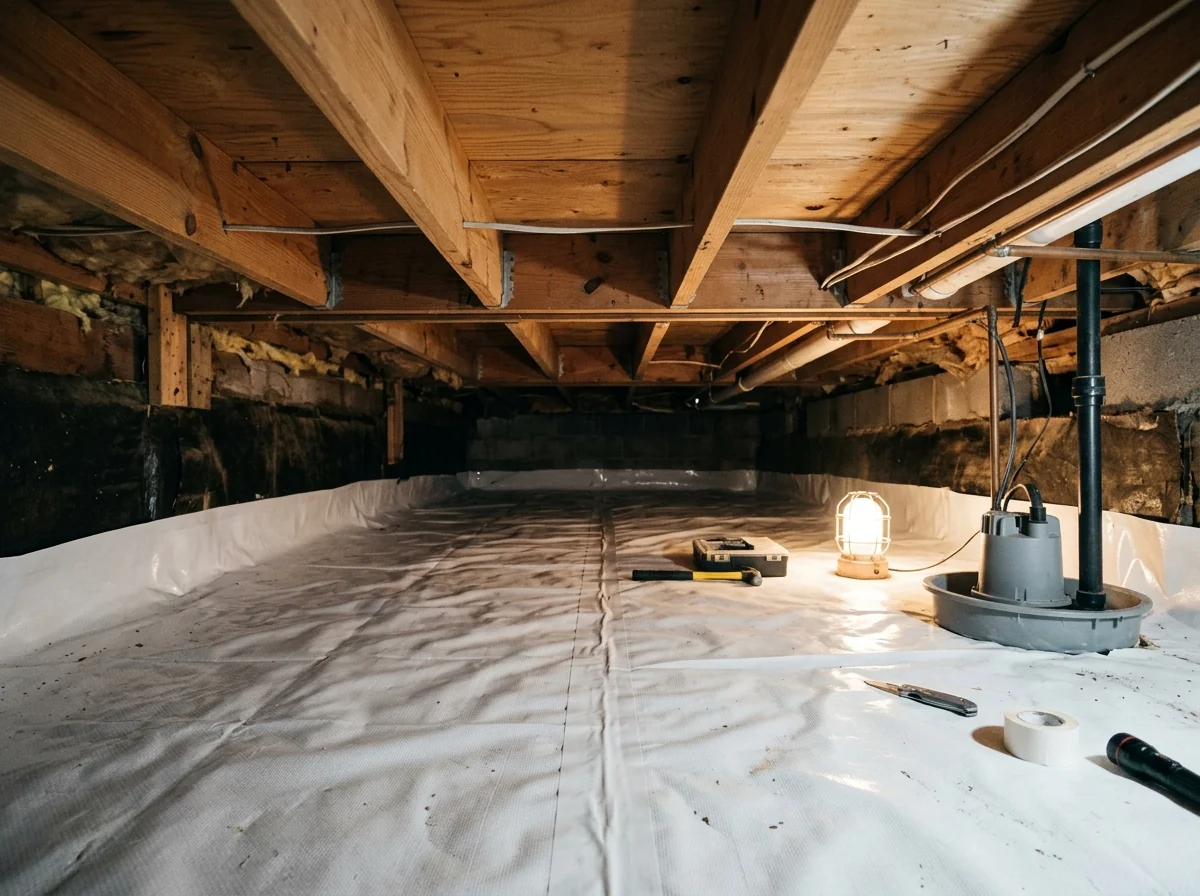
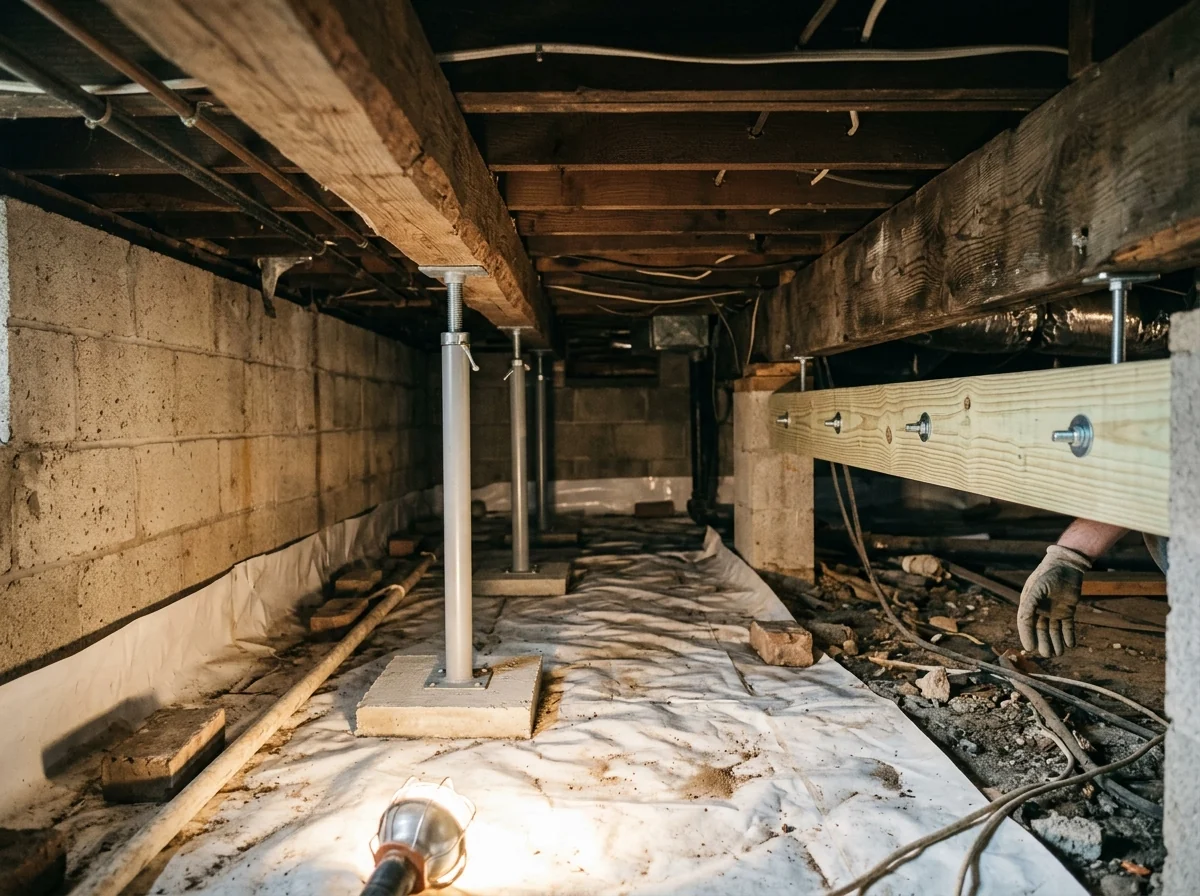
Encapsulation seals a crawl space off from the ground. Code asks for a continuous Class I vapor retarder over the soil of an unvented crawl space, seams overlapped 6 inches and sealed, edges run at least 6 inches up the walls. It sets no thickness, so check the mil rating in the quote. Vents are closed, a dehumidifier holds humidity under 60%, and standing water gets a drain first.
See crawl space encapsulation in Farmington Hills and crawl space repair.
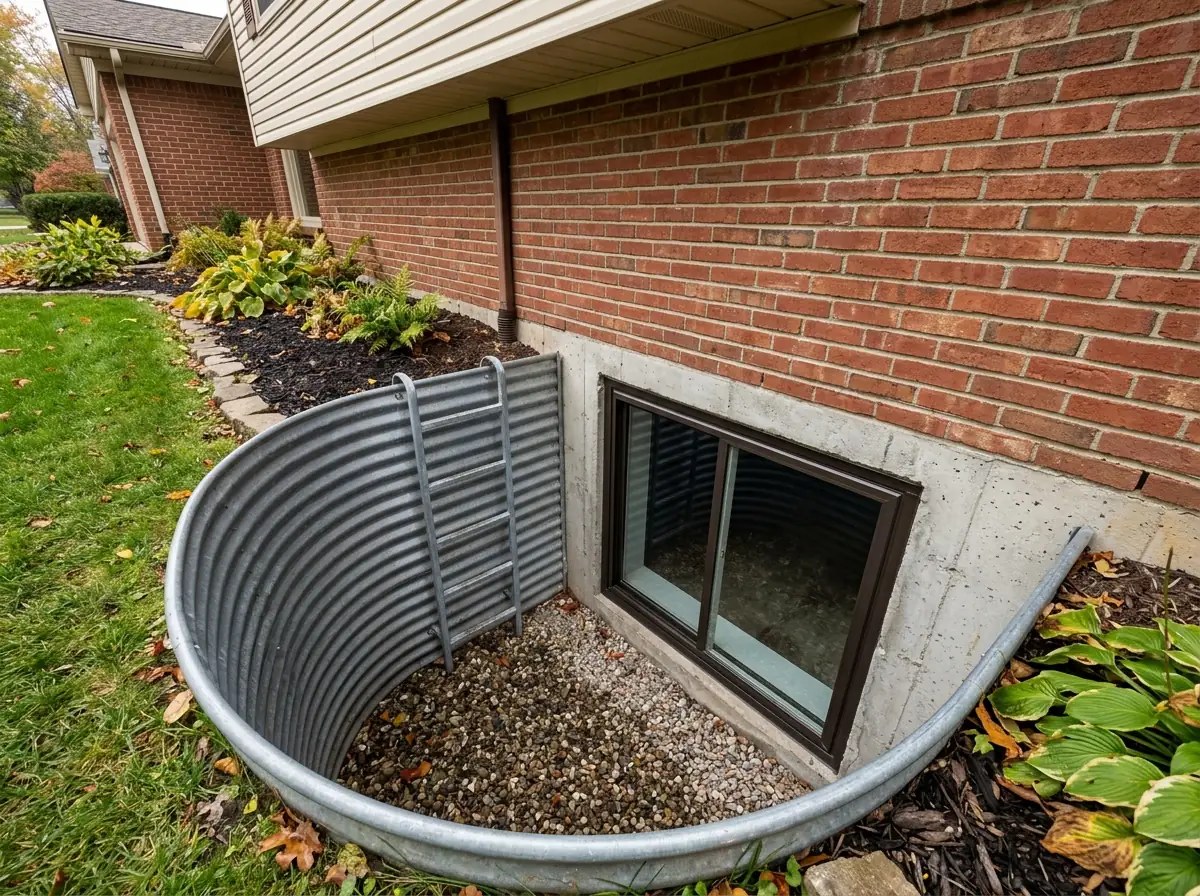
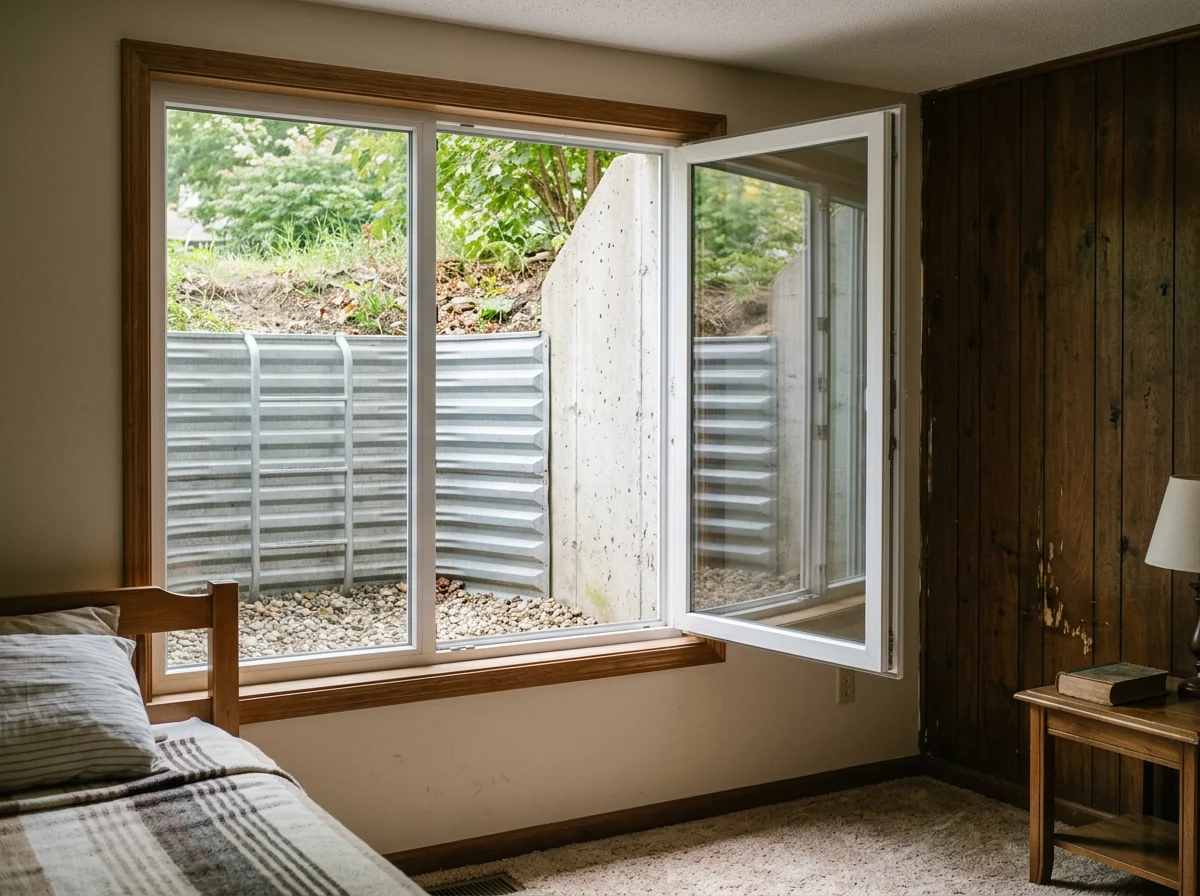
Egress Windows and Window Wells
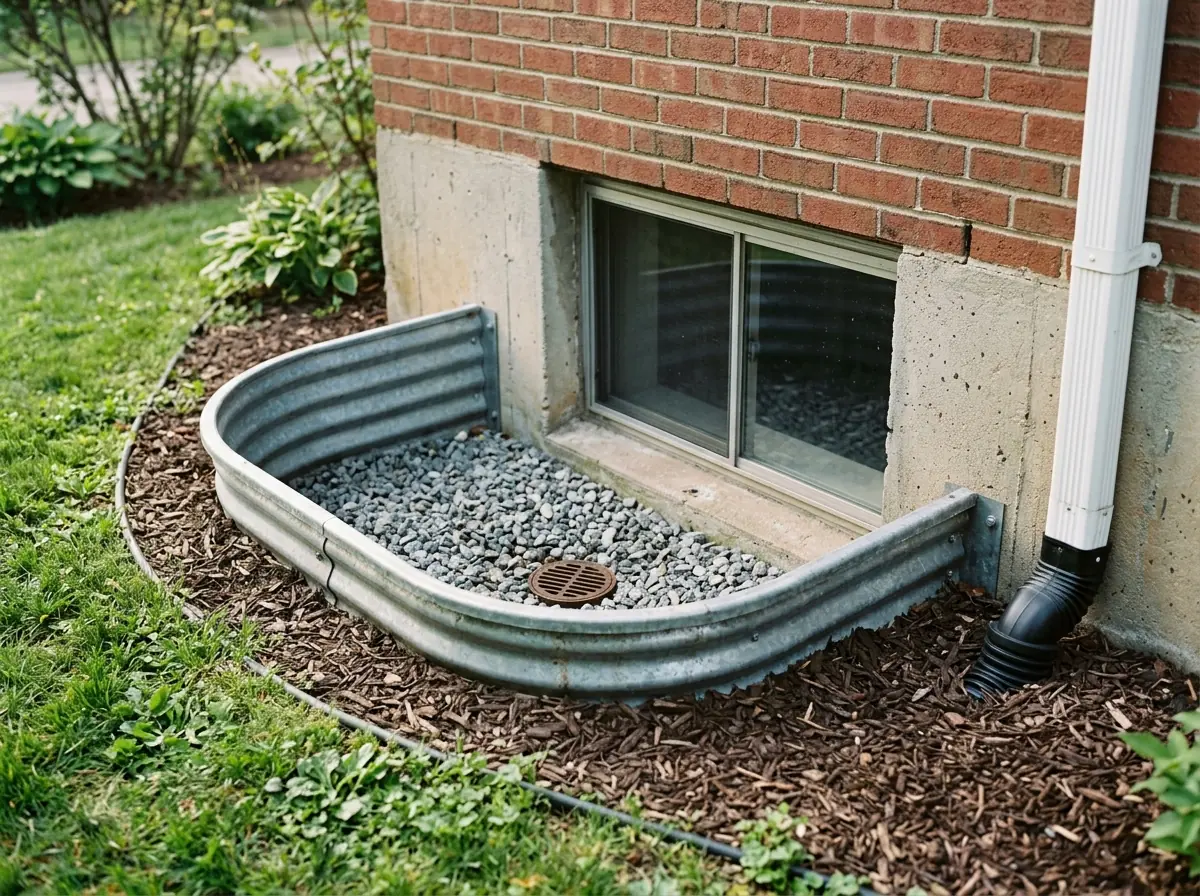
An egress window is what lets a basement bedroom pass code. The opening needs at least 5.7 square feet clear (5 for some below-grade openings), 24 inches high and 20 wide, with the sill no more than 44 inches off the floor. The well outside needs 9 square feet and 36 inches of projection, a fixed ladder once it's deeper than 44 inches, and a drain, normally into the foundation drain. Repairing an existing basement doesn't trigger one; adding a bedroom does. Leaking basement windows, clogged well drains and well covers are part of the same job.
See egress window installation in Farmington Hills and window well installation.
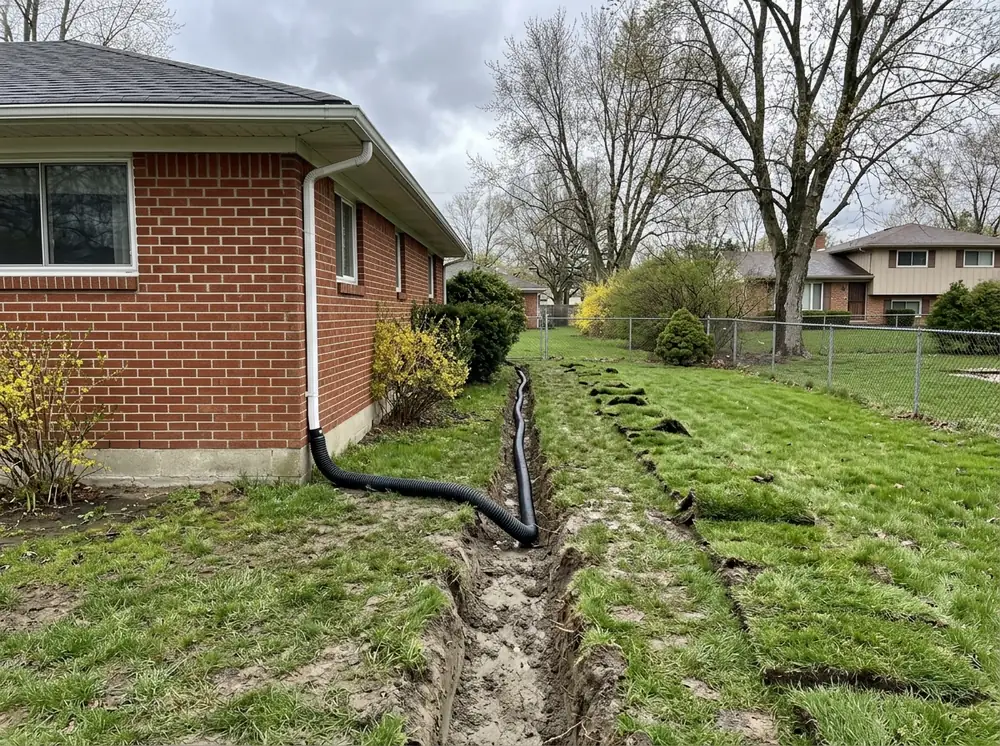
Yard Drainage, French Drains and Downspouts
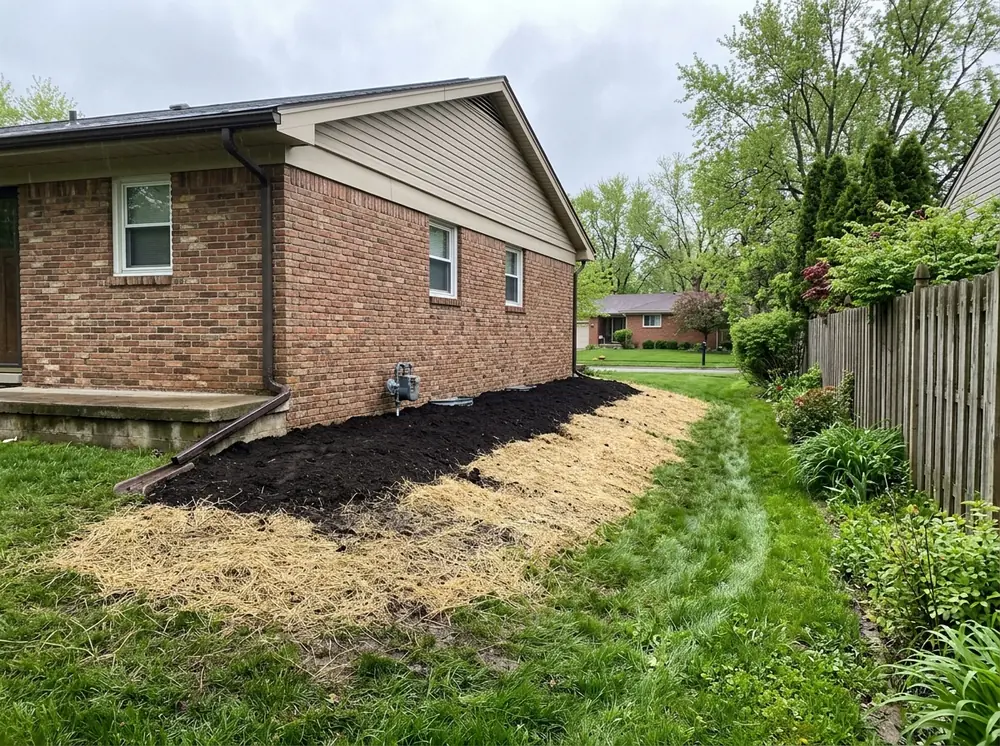
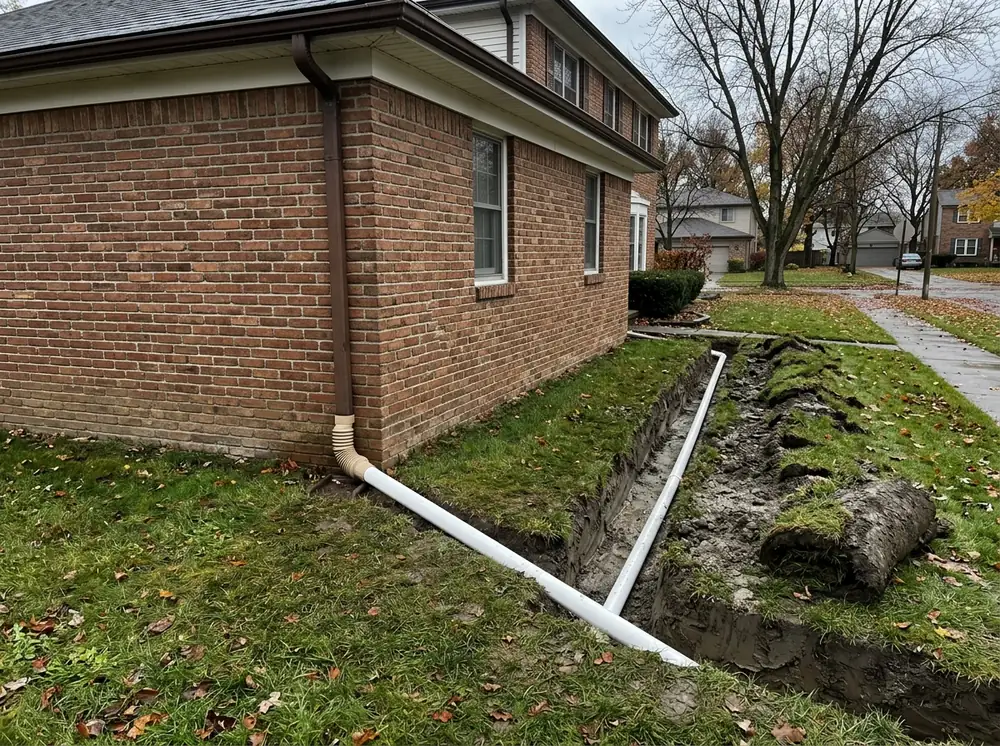
The cheapest work on this list, and in our view the place to start. Most foundation leaks come from soil soaked by rain and snowmelt right beside the wall, not from groundwater. The code wants the ground to fall at least 6 inches in the first 10 feet, and the city's own ordinance asks for a 5% slope over 10 feet. EPA's Indoor airPLUS spec carries downspouts at least 5 feet out onto sloping ground, or 10 feet to an underground catchment. A buried downspout line, regrading or a French drain across a soggy side yard is sometimes all it takes.
See French drain installation in Farmington Hills, yard drainage and buried downspout extensions.
Basement Dehumidifiers and Vapor Barriers
A basement can feel dry and still smell musty. EPA's target is humidity below 60%, ideally 30 to 50%. A dehumidifier drained to a pump or floor drain handles the air. Under a new slab, code calls for 6-mil polyethylene or an approved vapor retarder.
Specialty Basement Waterproofing Services
Each of these leaks has one entry point and a fix to match. Mold remediation and water damage cleanup are separate trades, and this site doesn't cover them.
Tie-Rod Hole Leak Repair
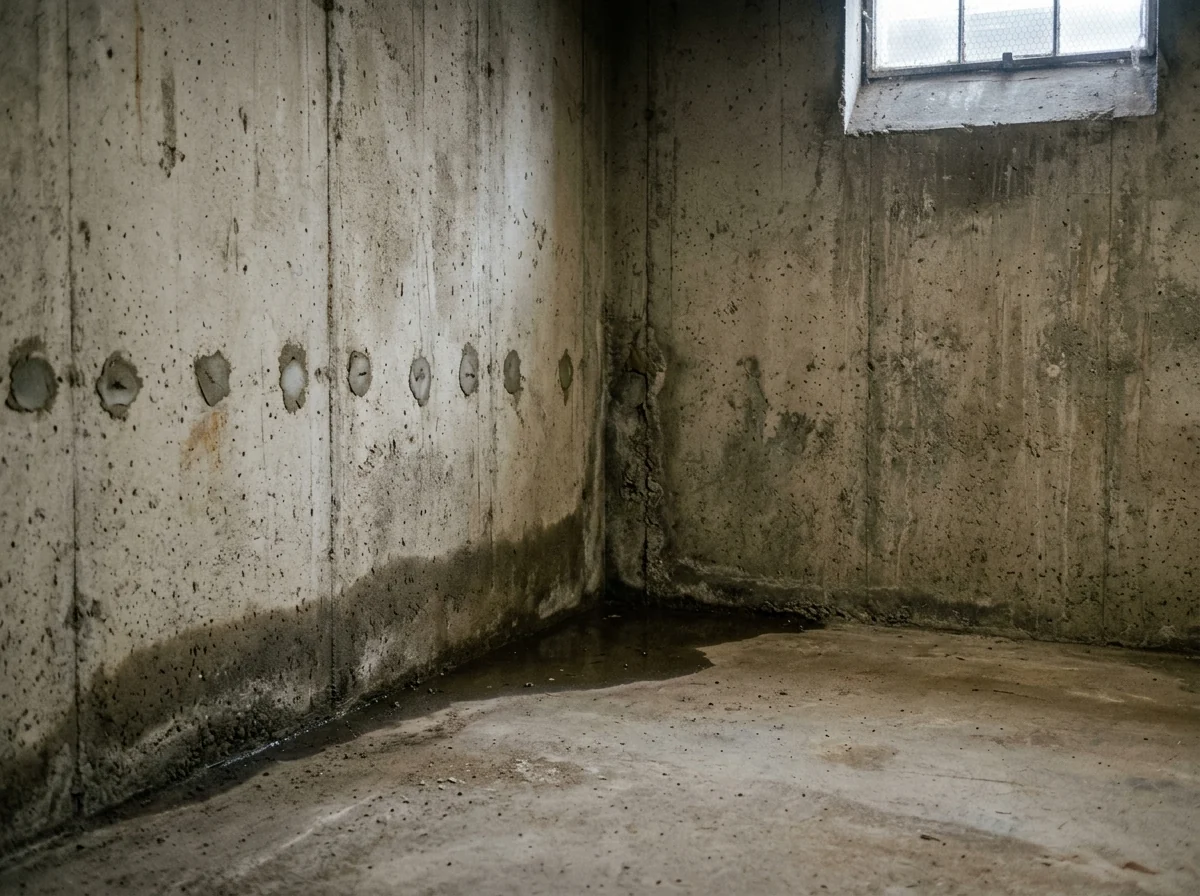
Poured walls are formed with metal ties, and the holes they leave are a common leak point: a row of damp spots at one height around the room. They aren't structural, and each is plugged or injected from inside.
Cove Joint Seepage
The cove joint is where wall meets floor. They were poured separately, so the seam can't resist hydrostatic pressure, and caulk over it rarely lasts. Drain tile relieves the pressure underneath.
Backwater Valves and Sewer Backup Protection
Water coming up through a floor drain is a sewer backup, not groundwater. A backwater valve on the building sewer lets waste out and closes when the main surcharges. Oakland County Emergency Management says only a licensed plumber or contractor should fit one.
Inspection-Flagged Cracks Before a Home Sale
When a buyer's inspector writes up a basement crack, the first question is shrinkage or horizontal. A shrinkage crack can usually be injected before closing. Get the method, location and invoice in writing so the buyer's side can see exactly what was done.
Efflorescence and Basement Wall Coatings
White, chalky salt on a wall means water is moving through the concrete and drying on the inside. A masonry coating can handle dampness but not water under pressure, so check the outside drainage first.
Radon-Ready Sealed Sump Lids
An airtight lid keeps damp soil air out of the basement. EPA puts Oakland County in radon Zone 2 and says every home should be tested regardless. A capped sump can later become the suction point for a radon system, but EPA doesn't recommend sealing alone to cut radon.
Get a free basement waterproofing estimate in Farmington Hills
- Free in-home inspection
- Written scope and price before work starts
- Cause found before a fix is quoted
- One local waterproofing contractor, not a call list
- No charge to homeowners for the referral
Basement Waterproofing Cost in Farmington Hills
Basement waterproofing typically costs $6,000 to $18,000 in HomeGuide's national data (January 2026): about $6,000 to $12,000 for an interior system and $10,000 to $18,000 for exterior work. We haven't found Michigan figures, so every range below is national. Single repairs cost far less.
| Job | National range | HomeGuide, as of |
|---|---|---|
| Interior drain tile | $40 to $85 per linear foot ($4,000 to $17,000 total) | Feb 2026 |
| Exterior waterproofing | $10,000 to $18,000; membrane $4 to $7 per sq ft | Jan 2026 |
| Exterior perimeter drain | $30 to $90 per linear foot | Feb 2026 |
| Crack injection (non-structural) | $250 to $800+ per crack | Jul 2025 |
| Wall anchors / straps | $80 to $150 / $85 to $280 per linear foot | Oct 2025 |
| Sump pump installed / replaced | $600 to $2,500 / $400 to $700 | Aug 2023 |
| Crawl space encapsulation | $3 to $10 per sq ft ($3,000 to $15,000) | Jan 2026 |
| Egress window | $6,000 to $8,000 | Oct 2025 |
| Regrading | $1,000 to $5,000 | Jan 2026 |
Linear feet
Drain tile and anchors are priced by the foot, so one wet wall costs a fraction of four.Finished space
Drywall, carpet and built-ins along the walls have to come out before a trench is cut.Outside access
Driveways, patios and decks along a wall slow an exterior dig.Permits and backups
Plumbing and electrical permits, a backup pump and an RPZ device each add a line to the estimate.
Does Homeowners Insurance Cover a Flooded Basement?
Usually not when the water comes from flooding, and only with the right add-on when it comes from the sewer. FEMA says most homeowners policies don't cover flood damage, and an NFIP flood policy typically takes 30 days to start. Michigan's Department of Insurance and Financial Services says water and sewer backup isn't automatically covered either. Sump overflow is usually grouped with sewer backup under the same add-on. NFIP specialists answer at 800-720-1090.
If sewage backs up into a Farmington Hills basement, call the Oakland County Water Resources Commissioner at (248) 858-1127 (after hours (248) 858-0931) and file a written claim within 45 days of finding it. Under Michigan Public Act 222, the public agency pays only if a sewer defect it knew or should have known about caused at least half of the backup. Take photos before anything goes to the curb.
Commercial Basement Waterproofing in Farmington Hills
Commercial jobs use the same methods. The difference is who signs off and who has to work around the crew.
Apartments and Multifamily Buildings
Apartment buildings often share one perimeter drain and a few sumps, so one failed pump can wet several storage rooms. Backup pumps and high-water alarms matter more than in a house.
Landlords and Rental Houses
About a third of occupied homes in Farmington Hills are rented. For a landlord, a wet basement means tenant calls and damaged belongings, and the inspection and work have to be booked around the tenant.
Offices and Retail Buildings
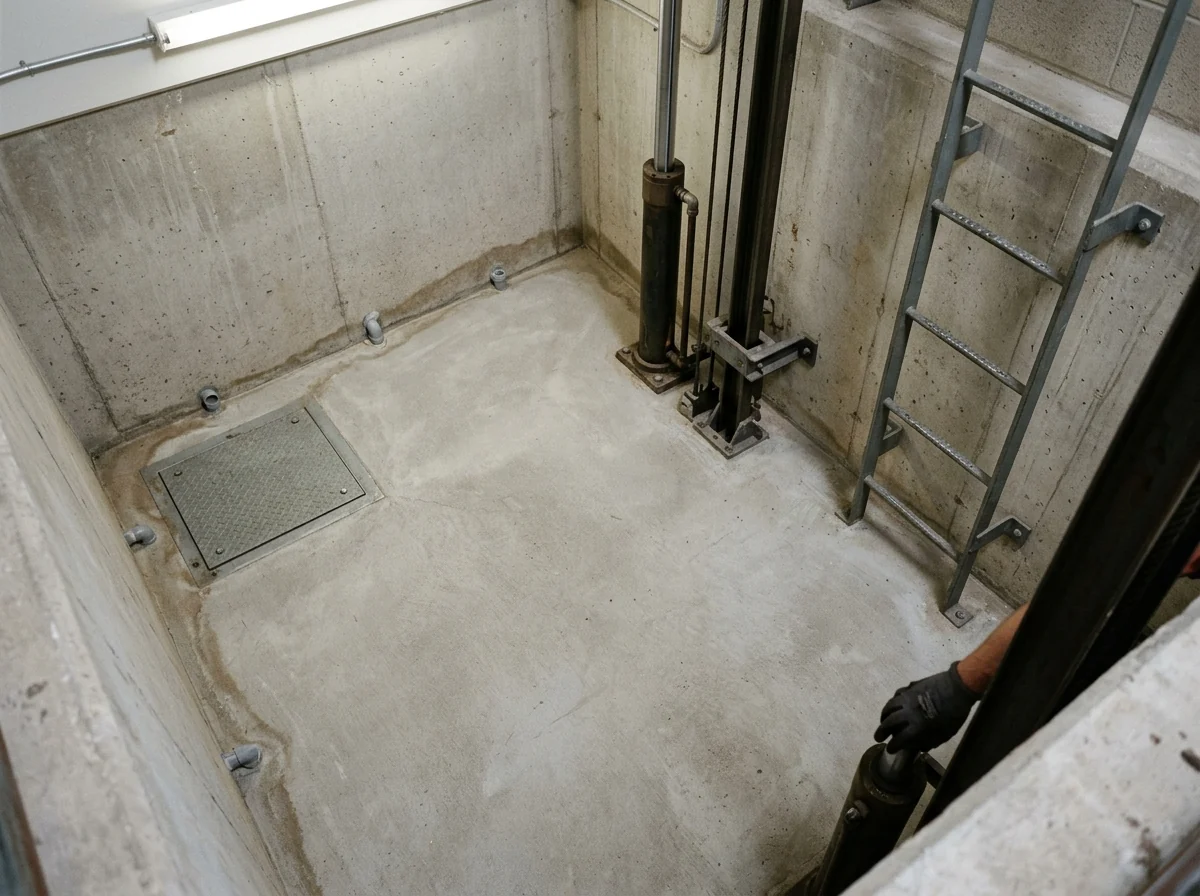
Below-grade storage, mechanical rooms and elevator pits take on water like any basement, and the work can often be scheduled outside business hours.
Condominium Associations and HOAs
Where the foundation is a common element, the board signs off. One inspection of the affected units gives the board a single written scope to vote on.
How a Waterproofing Referral Works
- 1
Send the Request
Use the form or call. Say where the water shows up, whether it follows rain, and whether the basement is finished.
- 2
Free Inspection
Farmington Hills Waterproofing passes it to one local waterproofing contractor, who calls to book a visit and checks the walls, floor, sump, grading and downspouts.
- 3
Written Estimate
The method, linear footage and price, in writing. Hold it up against the cost table above.
- 4
Permits, MISS DIG and the Work
The contractor pulls the plumbing, electrical or building permits the job needs and calls MISS DIG 811 before any exterior digging.
- 5
Walkthrough
Check the sump running, the discharge landing where it should, and the trench closed and cleaned up.
Things to Know Before Waterproofing a Farmington Hills Basement
Clay Till and a Seasonal High Water Table
Much of the city sits on glacial till. The NRCS describes the Capac and Blount soils mapped here as somewhat poorly drained, with seasonal water tables 0.5 to 2 feet down; Marlette, the most common, sits at 2 to 6 feet from October to May. Clay around a basement behaves like a bathtub: it fills with rain and empties slowly.
Most Homes Here Predate 1980
The median Farmington Hills home was built in 1979, and about 53% of housing units were built before 1980. Footing drains buried in the 1970s silt up over time, and the original dampproofing wears thin.
The 2014 and 2021 Floods
On August 11, 2014, 4 to 6.5 inches of rain fell on parts of Wayne, Oakland and Macomb counties, mostly within four hours. In June 2021 a Farmington Hills gauge caught 3.44 inches. Oakland County was in the federal disaster declaration both times.
Where Sump Water Is Allowed to Go
City ordinance bans sump water and groundwater from the sanitary sewer. Footing drain discharge goes to the storm sewer, or onto the ground at least 4 feet from the foundation, not across a neighbor's lot and not within 20 feet of the street right-of-way.
Permits and the Building Division
Window replacement and structural changes take a building permit. Homeowners can pull their own only for the house they live in. The Building Division: 31555 W. Eleven Mile Rd, (248) 871-2450.
Check the Contractor's LARA License
Basement waterproofing is a licensed Maintenance & Alteration trade in Michigan, printed on the license itself, and jobs of $600 or more need a licensed contractor. Look it up on LARA's site or call 517-241-9309.
MISS DIG Before an Exterior Dig
Michigan law requires a free MISS DIG 811 ticket at least three business days before digging, and hand digging within 4 feet of the marks.
42-Inch Footings Under the 2015 Code
Exterior footings reach 42 inches below grade under the 2015 Michigan Residential Code, which LARA lists as current. An exterior waterproofing trench goes at least that deep.
Why Use Farmington Hills Waterproofing
One Contractor per Request
Our referral service sends each request to one contractor. Your number doesn't go out to a list of companies.
Cause Before the Quote
The contractor finds where the water gets in before pricing anything, so the estimate covers the actual cause.
Questions Worth Asking
How many linear feet? Epoxy or polyurethane? Where does the sump discharge? Is there a backup pump?
No Fee for Homeowners
You pay the contractor for the work. The referral is free.
Basement Waterproofing Service Area in Farmington Hills
Farmington Hills Waterproofing takes requests from anywhere in Farmington Hills, all 33 square miles of it in Oakland County. Not sure you're inside the city line? Send the form and we'll check.